


 Belgium
 Denmark
 Finland
 Germany
 Malaysia
 Netherlands
 Norway
 Poland
 Sweden
 UK
UK


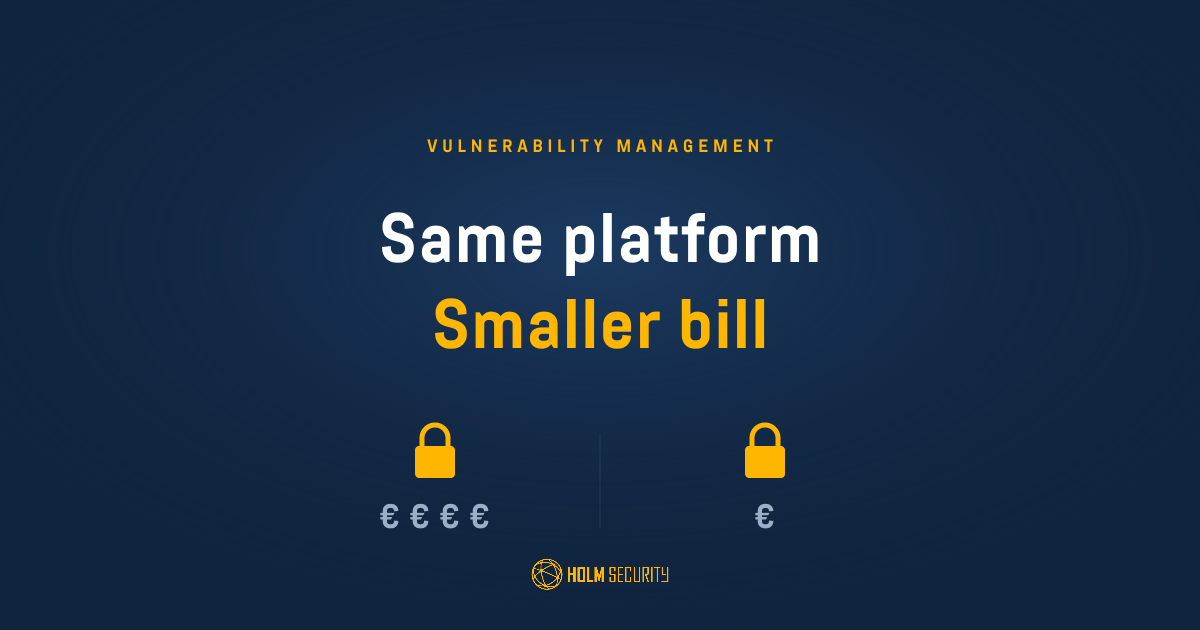
You don't need a Security Operations Center (SOC) to run a vulnerability management program. You do need a platform that doesn't assume you have one.
Here's what we hear from small and mid-market IT teams:
- You run the helpdesk, the backups, the patching, the onboarding, and now the compliance evidence too.
- Somebody at board level or the CEO has read about the NIS2 Directive.
- You know vulnerability management is the right thing to do, and you're not avoiding it.
- You just opened a demo of a platform that clearly expects a full-time analyst to sit in front of it, and you thought: who exactly is going to do this?
That's a fair question. The problem isn't the size of your team. It's that most of this category was built for organizations with a security function.
What is a vulnerability management program?
A vulnerability management program is the ongoing process an organization uses to find weaknesses across its assets, decide which ones matter most, fix them, and prove the work was done. It's a continuous exercise, and it covers systems, networks, web applications, cloud, and even users. The process is the same whether you're a hospital group with forty people in security or a manufacturer with two people in IT.
Cost matters, and it should. Nobody with a small budget should be talked out of caring about price. But the license is only the visible half. The hours are the other half, and that half is usually the more expensive one. That's why the platform decision matters more for you than it does for a bigger organization.
How to work out the real cost of a vulnerability management program
The real cost of a vulnerability management program is the license, plus the hours your team spends running it, plus whatever setup costs in year one. Deployment, configuration, and onboarding are often quoted as a separate professional services line, sometimes as a fixed package. Ask whether it's required, recommended, or optional, and what happens if you skip it. How much configuration a platform needs before it produces anything is the clearest signal of how much of your time it will need afterward.
Next, work out who on your team does each of the following, and how long it takes them every month:
- Assets: Getting hosts, IP ranges, and web applications into the platform, keeping owners and business impact current, and retiring the ones that no longer exist
- Scanning: Running scanners or agents behind the firewall, maintaining the credentials authenticated scans depend on, and adjusting profiles and schedules as the environment changes
- Results: Investigating false positives and deciding what gets ignored, formally accepted as risk, or sent back to the vendor
- Remediation: Setting up the rules and the ticketing integration so findings reach the right person automatically, then following up on the ones that stall
- Ongoing overhead: Users, roles and single sign-on, reporting for auditors and the board, training when someone joins or leaves, and the renewal
Can a small team run a vulnerability management program?
None of those five tasks is beyond a small IT team. The problem is that most platforms hand you all five.
What you will always do yourself
- Assets: Only you know what that server is for, who depends on it, and whether it should still exist. A platform can find assets. It cannot tell you what they mean to your business.
- Scanning: Credentials, maintenance windows, and where the scanners sit are decisions about your network. Set up once, revisited when things change.
- Remediation: Rules and ticketing integrations can route findings to the right person automatically once configured. Somebody on your side still has to care whether the ticket got closed.
What the platform should be doing for you
- Results: Sorting findings has no end. Clear the list today and there is a new one tomorrow, which is why it is the task that quietly eats small teams. It is also the one that the right platform can genuinely take off you.
- Ongoing overhead: Single sign-on, scheduled reporting, and audit evidence should arrive with the license. When they show up as add-ons or configuration projects, they become your work by default.
What makes vulnerability management expensive for a small organization?
Because the price scales with thoroughness, not with your size. Some platforms charge more the more thoroughly you scan: extra for authenticated scanning, extra for local scanners, extra for each additional way you assess the same machine. A small team ends up rationing the very things that make the program worth having.
This is a familiar moment: the quote comes back priced for a company three times your size, because the tier you actually need sits two tiers above the one built for a team like yours, all because one feature you cannot do without sits at the top.
The right platform for a small team
You don't need a bigger team. You need a platform that fits the one you have.
Th decision comes down to two questions:
- How much of your time will this platform need every month, and
- How much of the work can it take off you rather than hand to you?
That is the test worth applying to anything you evaluate: not whether it has the longest feature list, but whether it respects the hours of the people who have to run it.
Holm Security is built for exactly this, and it scales the same way for teams many times your size. It covers your whole attack surface: business-critical systems/servers, computers, network devices, office equipment, IoT, OT (Operational Technology), Kubernetes, Active Directory, web applications, cloud-native platforms, APIs and users, so you are not stitching together a separate tool for each. The licensing matches that simplicity: one asset takes one license, however many ways you assess it, and scanners and agents carry no license of their own.
Findings can route straight into the tools you already use, Jira, ServiceNow, TOPdesk, Slack, or Microsoft Teams, so remediation does not become a manual handoff on top of everything else. The platform also takes on the endless work of triaging findings, so your time goes to the decisions only you can make.
Book a demo to see what it looks like with a team your size.

Product Manager & Co-founder
Stefan is one of Europe's most prominent cybersecurity entrepreneurs and previously founded the Swedish Webhosting Group and Stay Secure.